Inspired by the Chōjugiga — the 12th–13th century Japanese ink scrolls in which frogs, rabbits, monkeys and foxes play and celebrate together — this series of sixteen paintings imagines a world where every living creature is painted with equal affection: big and small, predator and prey, celebrated and overlooked.
Each painting carries a seasonal or folkloric theme rooted in Japanese tradition — Zen koans, Shinto spirits, nursery songs, and ancient festivals — while speaking to something timeless about how we regard the lives that share our world.
The paper used throughout is kumohadamashi, a handmade kozo washi. Its color will deepen and warm with age — a quality known in Japanese aesthetics as koshoku, "old color," cherished as an added value.
Art & Music Video — A Song of Life
In collaboration with musician Sizzle Ohtaka (おおたか静流) · Music: IKOR
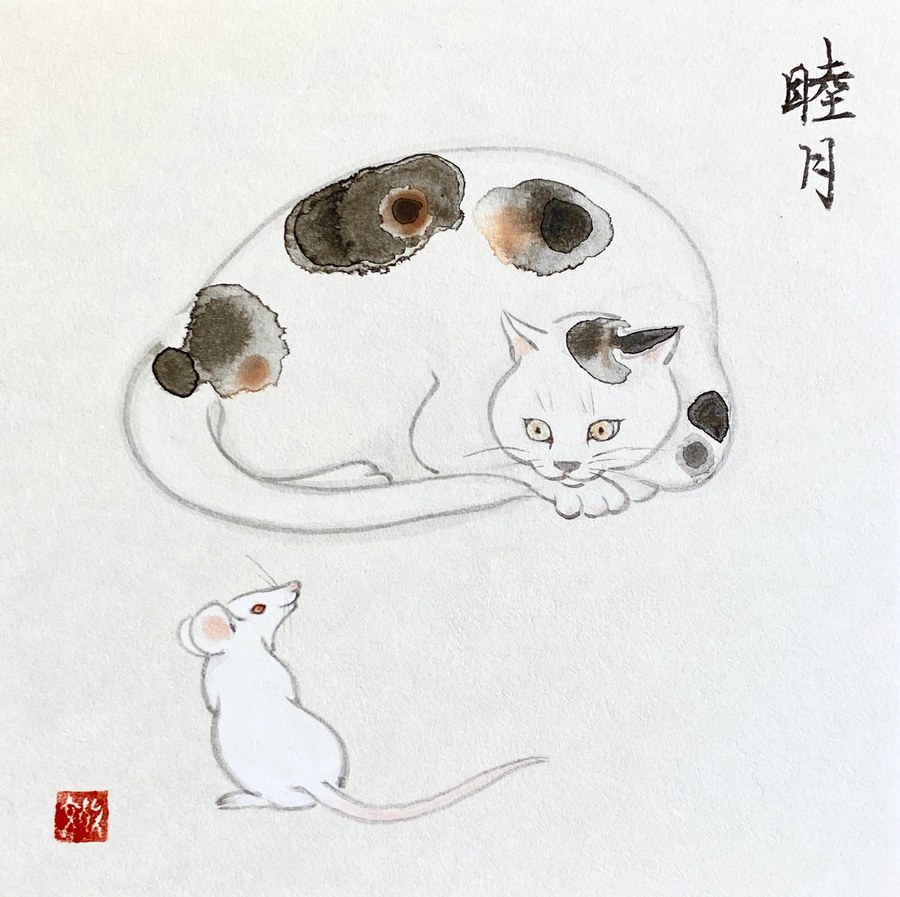
No. 1 · January · 睦月
Cat and Mouse
Predator and prey painted with equal strength — a cat and a mouse together in the month of Mutsuki, "the month of harmony."
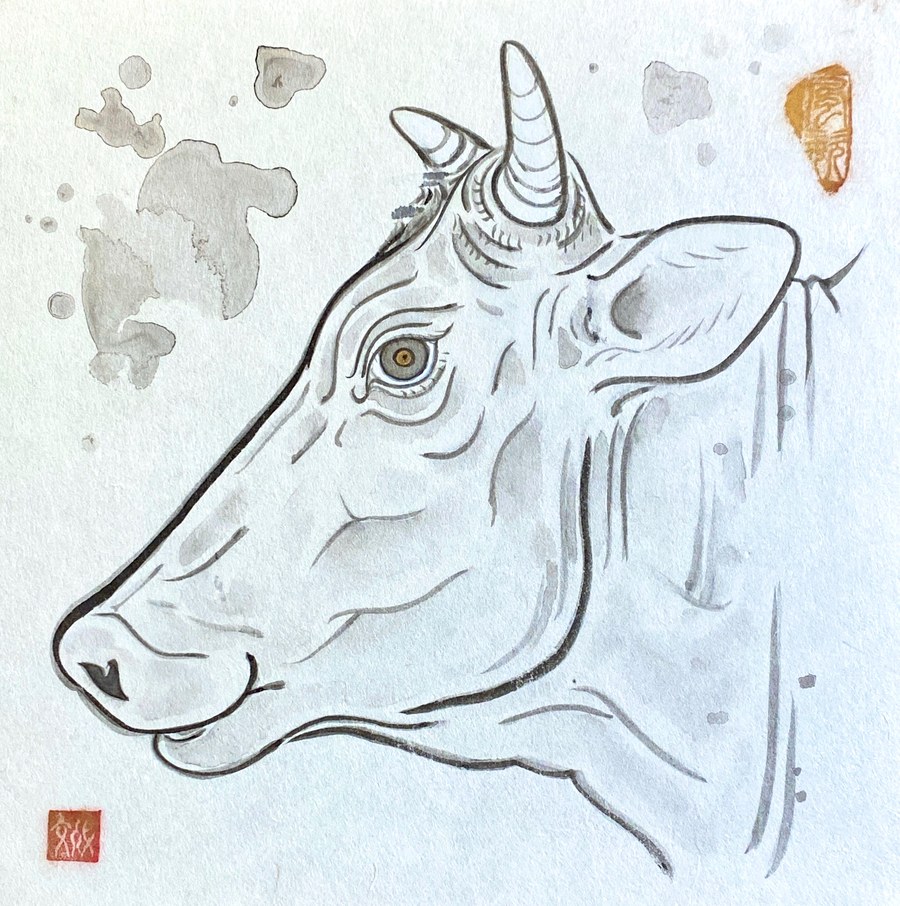
No. 2 · February · 如月
The Holy Cow
The cow holds sacred meaning across cultures and religions — the zodiac animal of 2021, and a meditation on how differently we see the same creature.
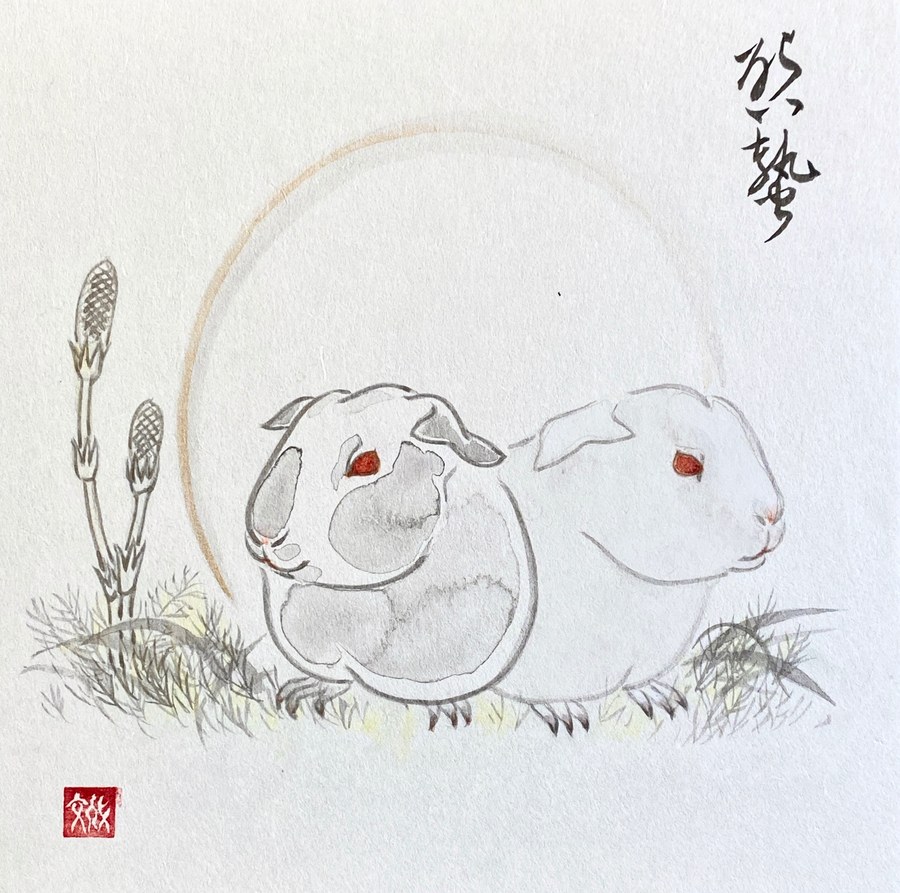
No. 3 · March · 弥生 · Keichitsu
Spring Coming Out
Keichitsu — the moment in early March when hibernating creatures re-emerge. Modeled on the artist's own guinea pigs, gently stepping into the light.
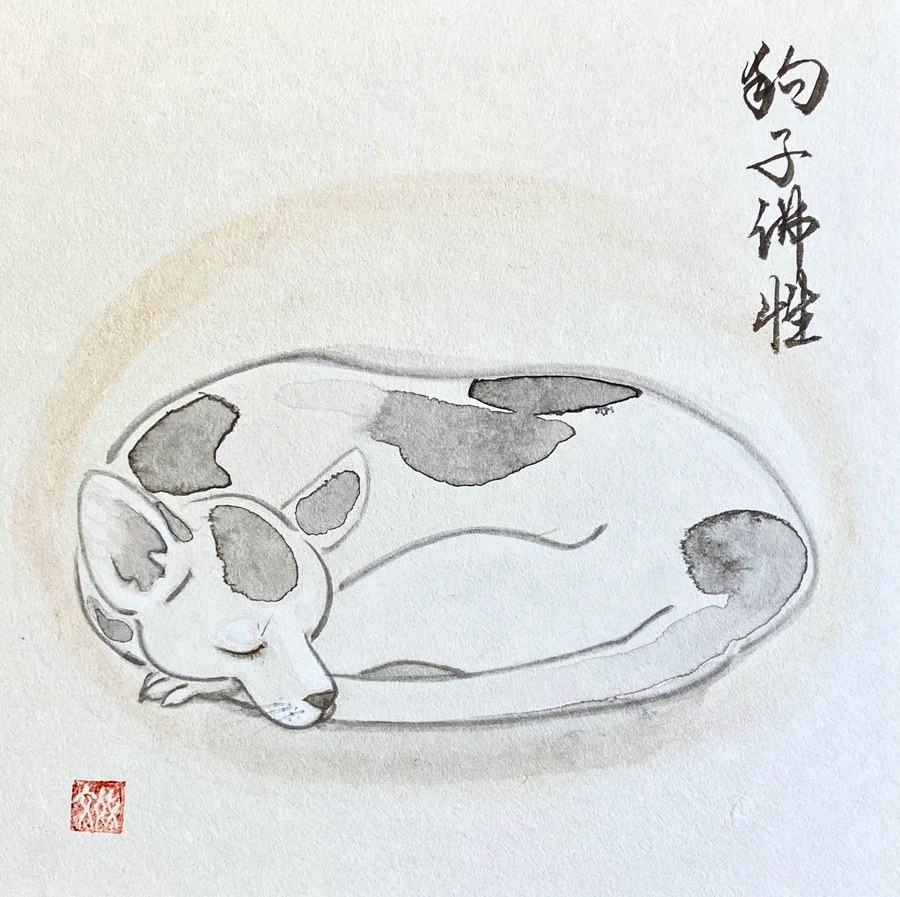
No. 4 · April · 卯月
Buddha Nature of a Dog
Based on the Zen koan — does a dog have Buddha nature? Watching her own dog breathe peacefully in spring, the answer felt certain.
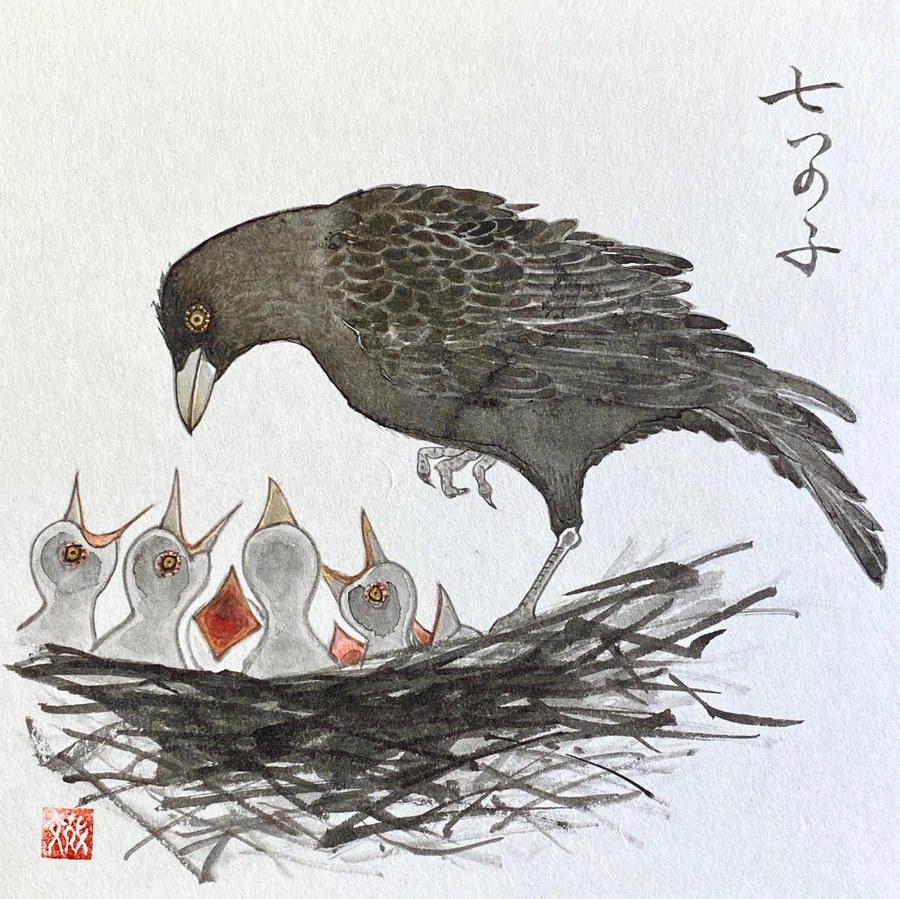
No. 5 · May · 皐月
Seven Chicks
A crow and her chicks — crows have been messengers of the gods in Japanese mythology since ancient times, yet are often misunderstood.
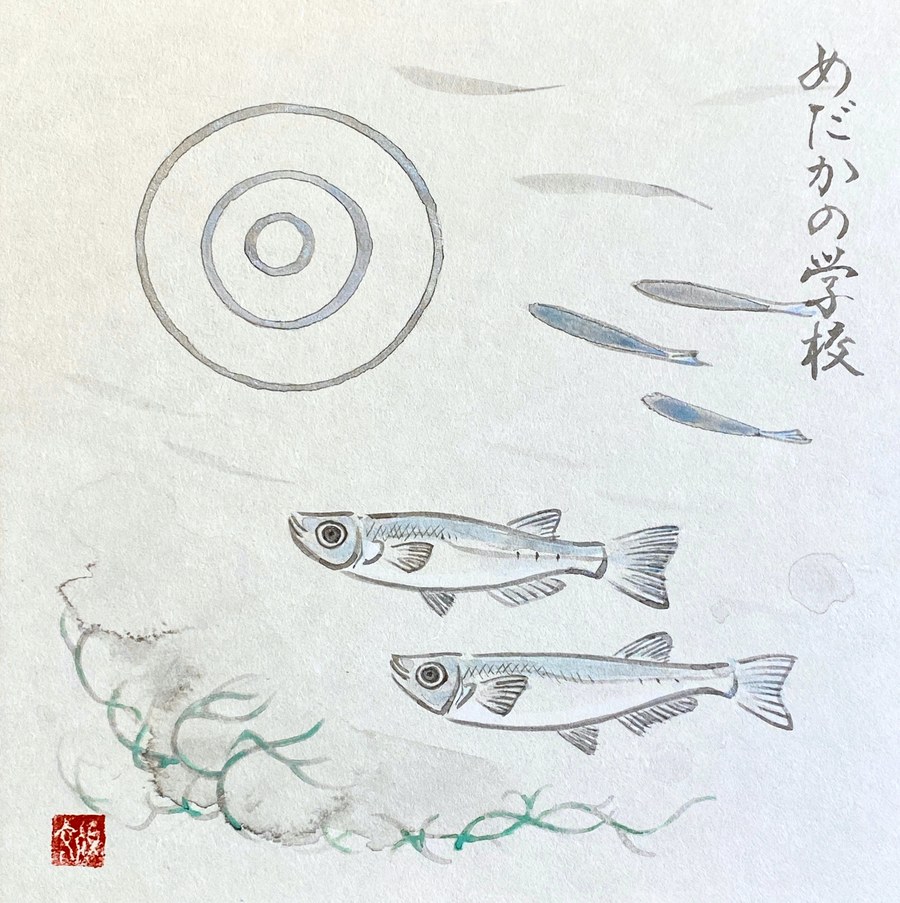
No. 6 · June · 水無月
School of Medaka Fish
From a beloved Japanese nursery song — tiny fish imagined as children playing at school. Now a near-endangered species, each one precious.
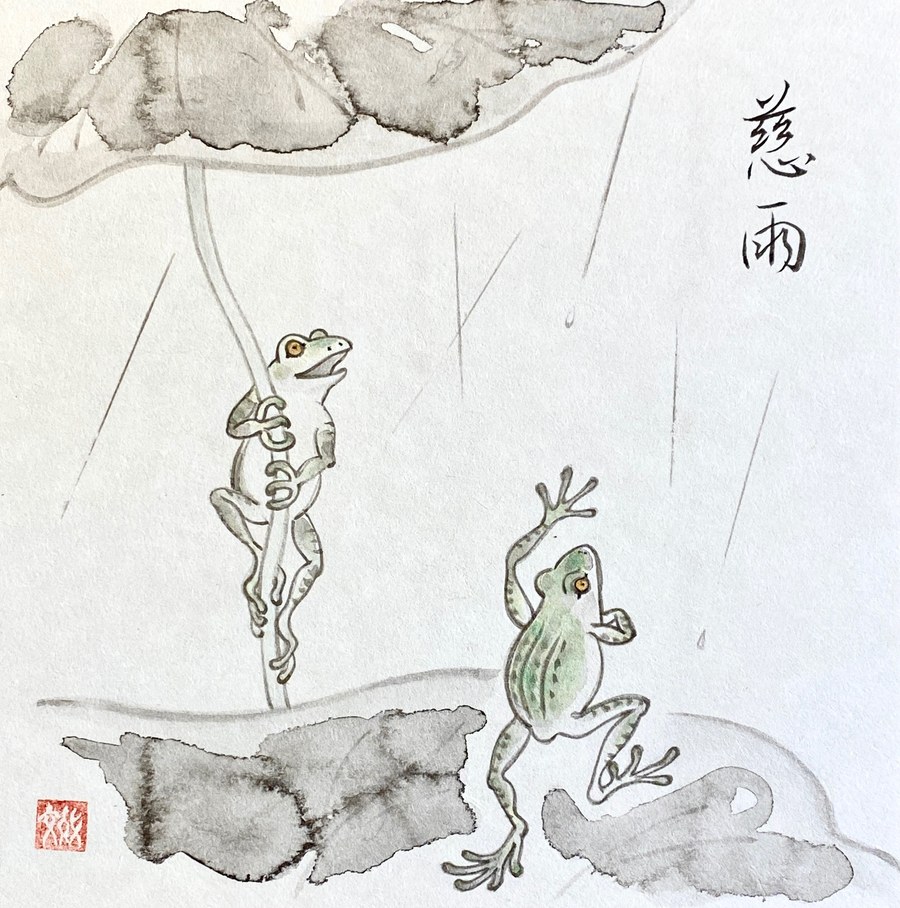
No. 7 · July · 文月
Blessing Rain
The tree frog — harbinger of rain, associated with summer in Japan. Its cry before the rain arrives is a small forecast, a quiet gift.
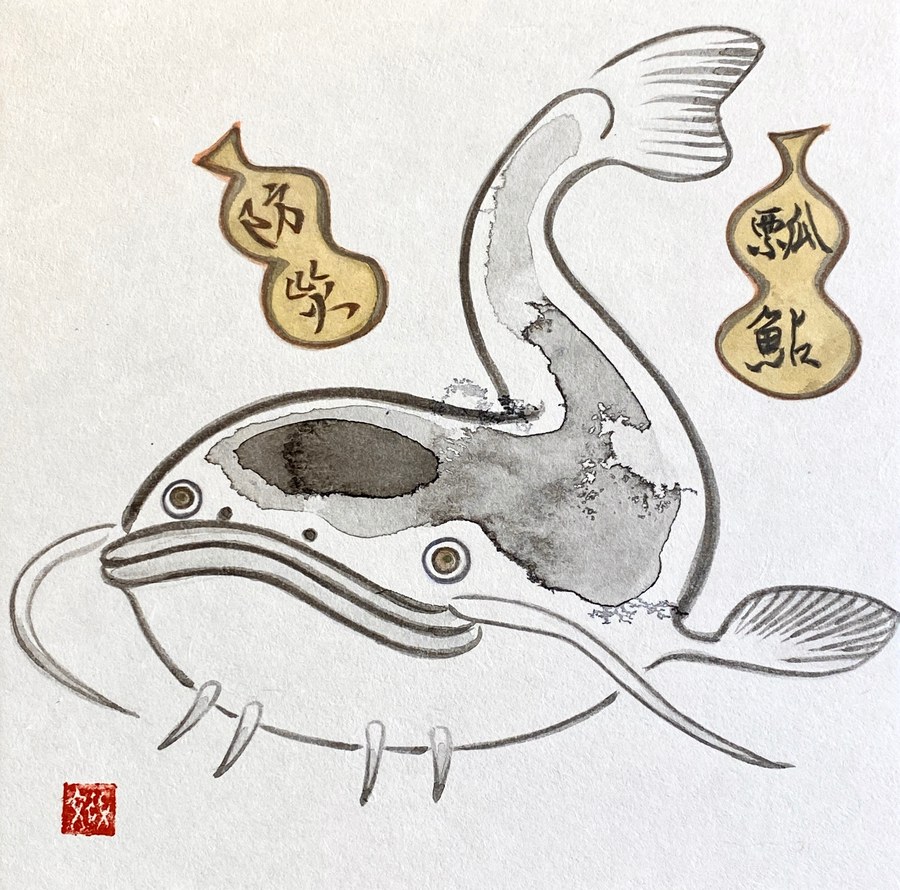
No. 8 · August · 葉月
Disaster-Preventing Fish
The catfish — sometimes mocked for its appearance, yet placed on rooftops in Japan as a guardian against fire. A protector in disguise.
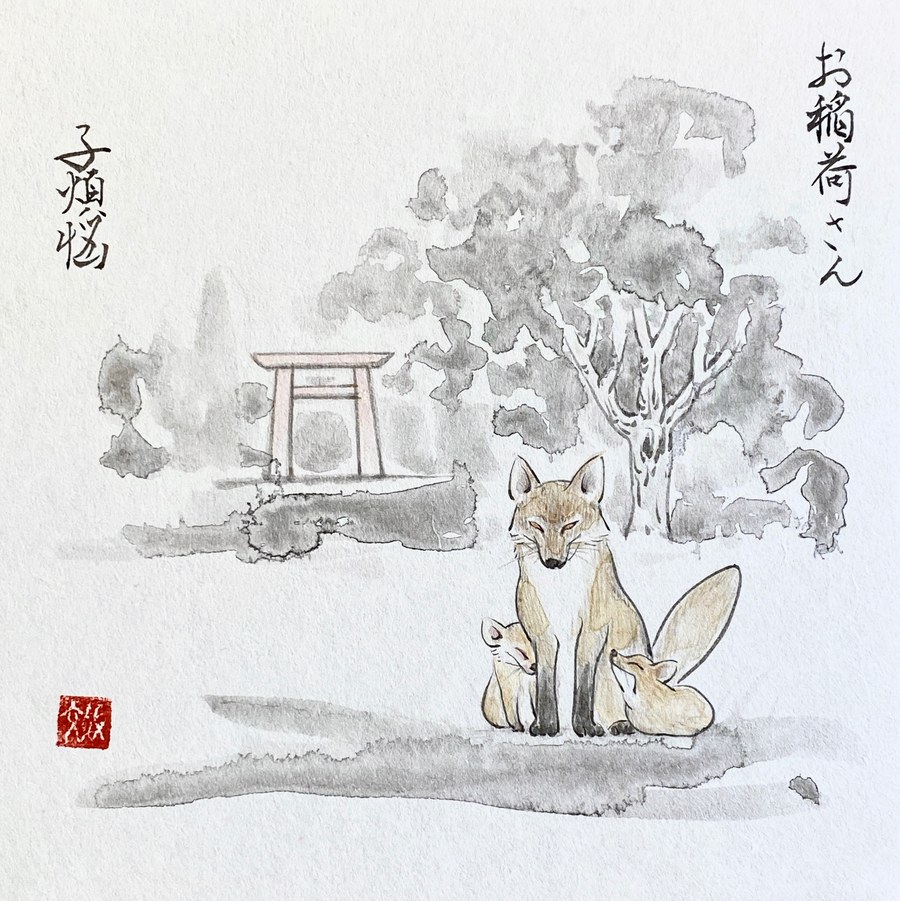
No. 9 · September · 長月
Affectionate Oinari-san
The fox — worshiped as a messenger of Inari in Japan, yet feared or scorned elsewhere. A study in how a single creature can hold such different meanings.
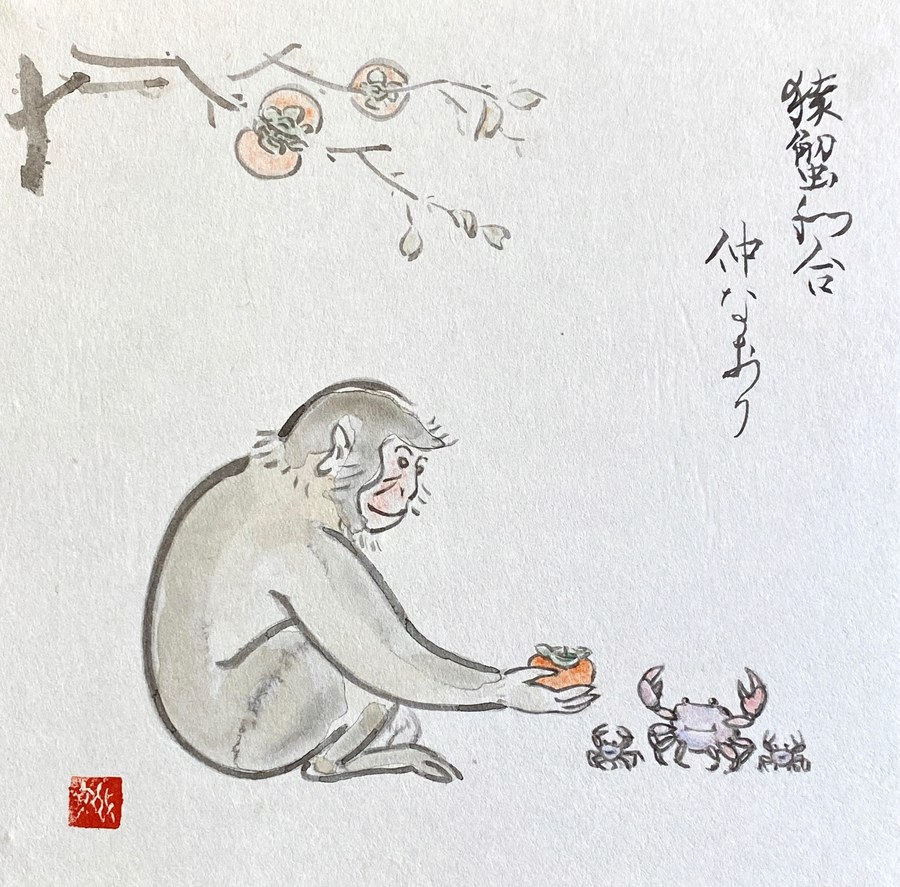
No. 10 · October · 神無月
Reconciliation
Based on the folk story of the monkey and the crabs — a tale of conflict, consequence, and the possibility of repair.
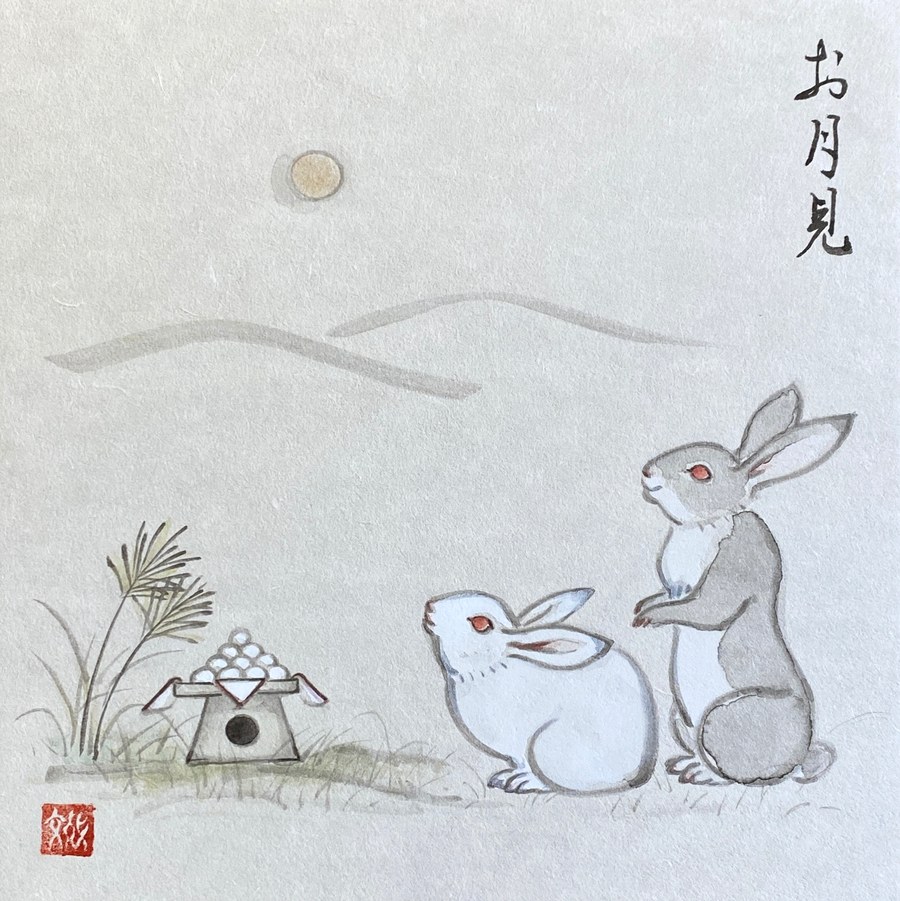
No. 11 · November · 霜月
Harvest Moon
Moon-viewing — the autumn celebrations of Jugoya and Jūsanya, when offerings of susuki grass and dango are set out beneath a luminous sky.
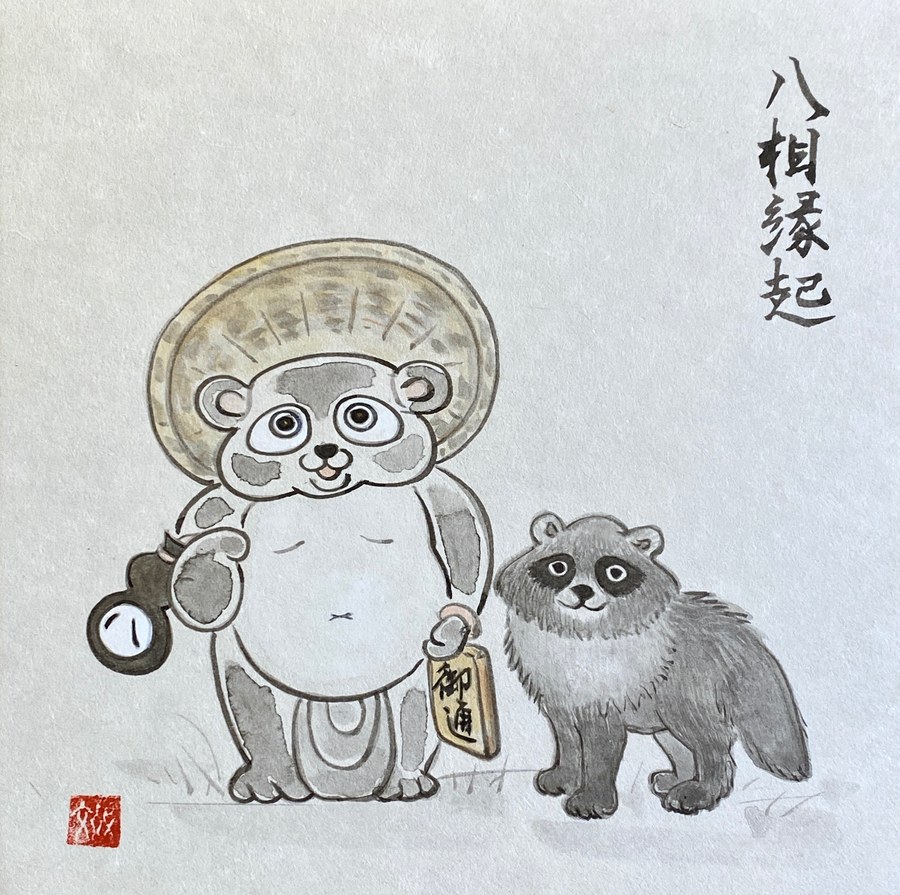
No. 12 · December · 師走
Eight Virtues
The tanuki — considered a nuisance by some, yet beloved in Japanese folklore for its eight auspicious attributes, including good luck and generosity.
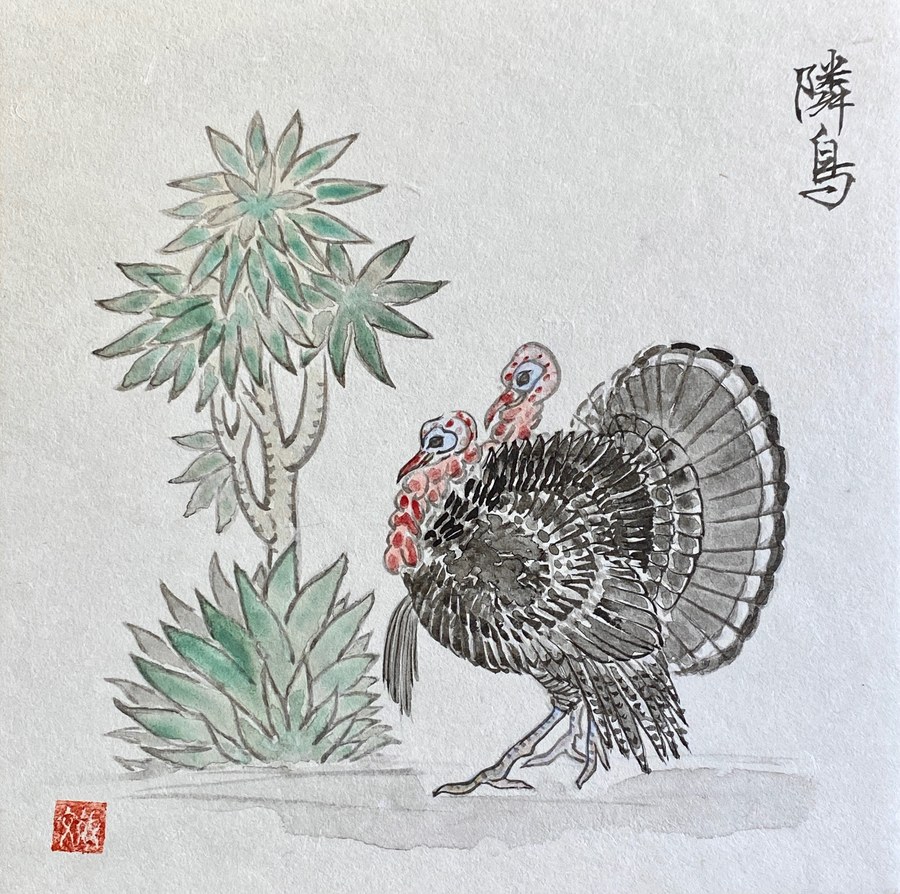
No. 13
Dignified Walk
Turkeys that roam the streets of Albany, CA — often complained about, unhurried and unbothered. Painted here with the dignity they deserve.
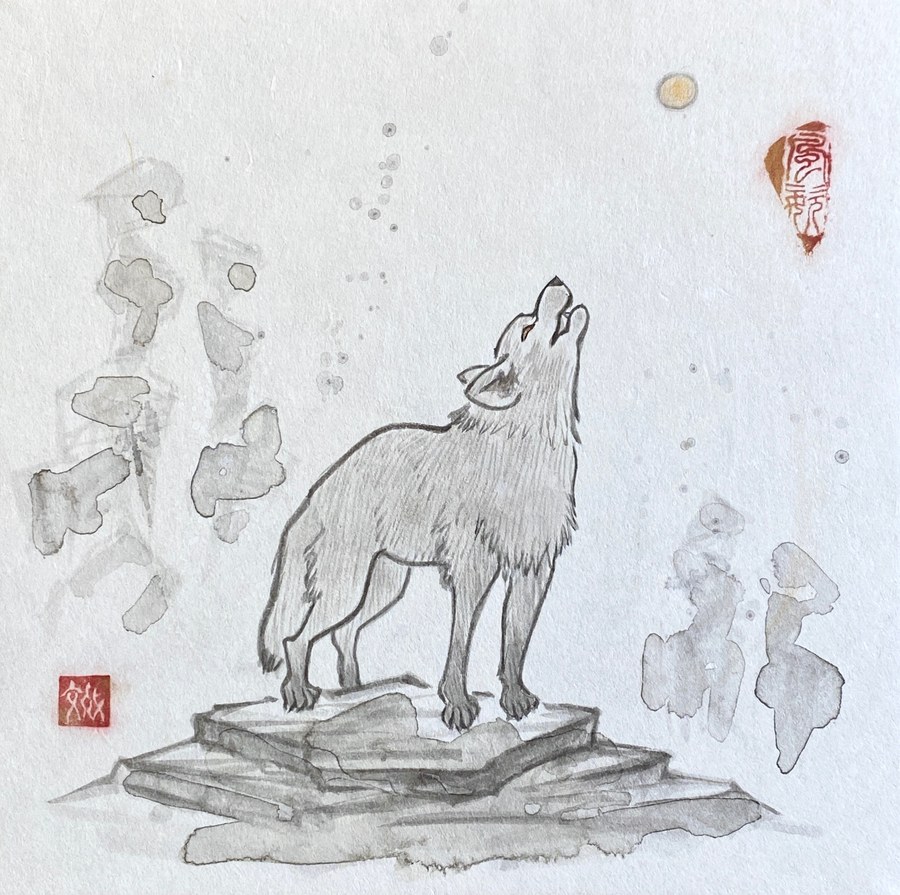
No. 14
Calling the Moon
The wolf — once worshiped as a god in Japan, now extinct there. Painted in hope that the howl might return, and be answered.
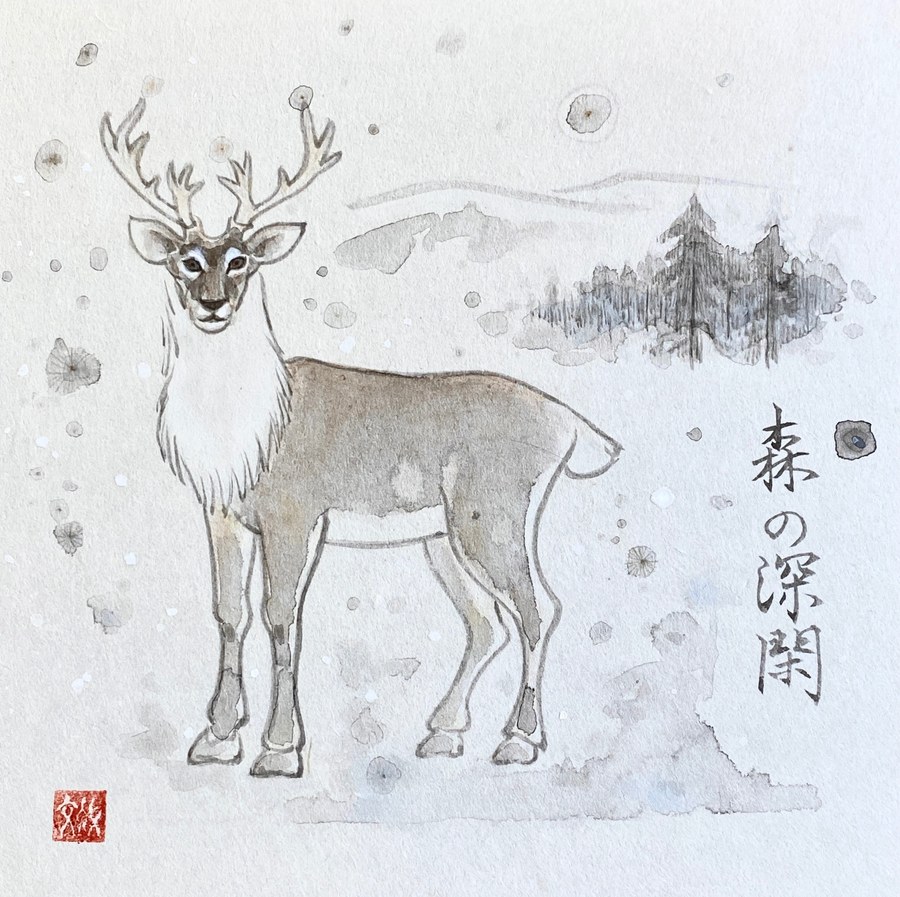
No. 15
The Saint of the Forest
The deer — a messenger of the gods in Japanese tradition, a forest spirit. Here painted as the quiet, sacred presence it has always been.
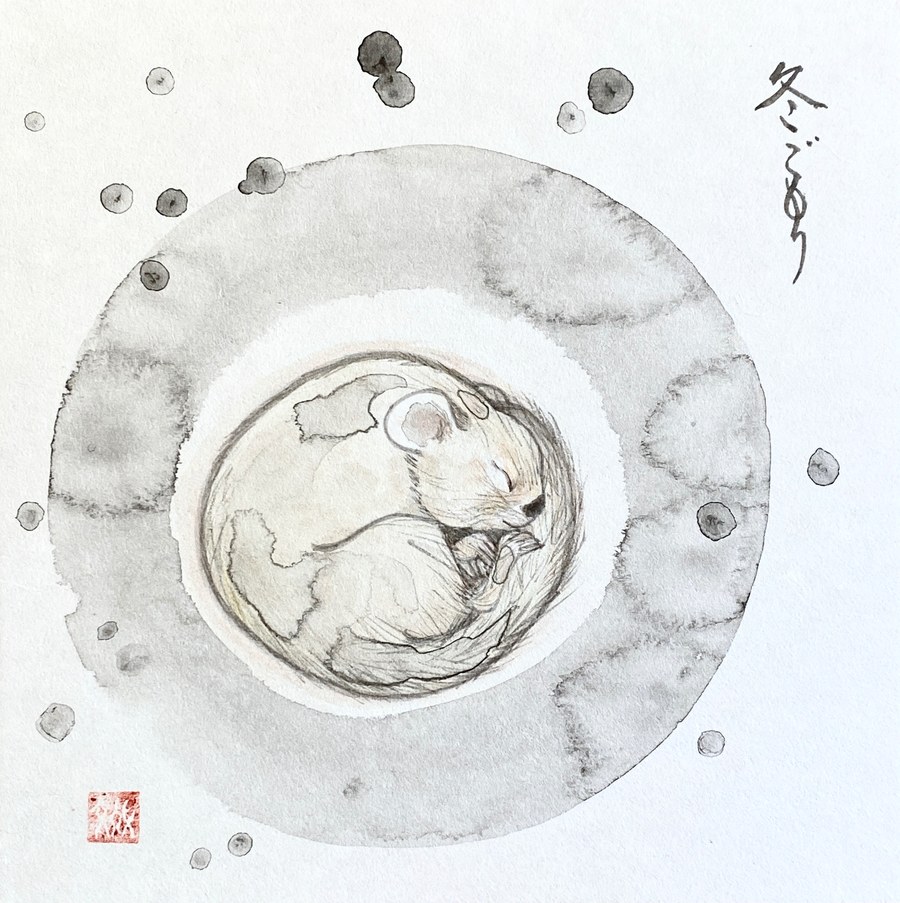
No. 16
Dreaming
A small hibernating creature, still asleep — waiting for a spring where every being may wake into a world of compassion and safety.
"I completed this series hoping that everybody will be awakened from sleep into a world where we can all live safely — where everyone is thoughtful and compassionate, and every life is treated with respect."
— Fumiyo Yoshikawa
Exhibited at 4Squared 2021 · Arc Gallery & Studios, San Francisco · August 28 – October 9, 2021